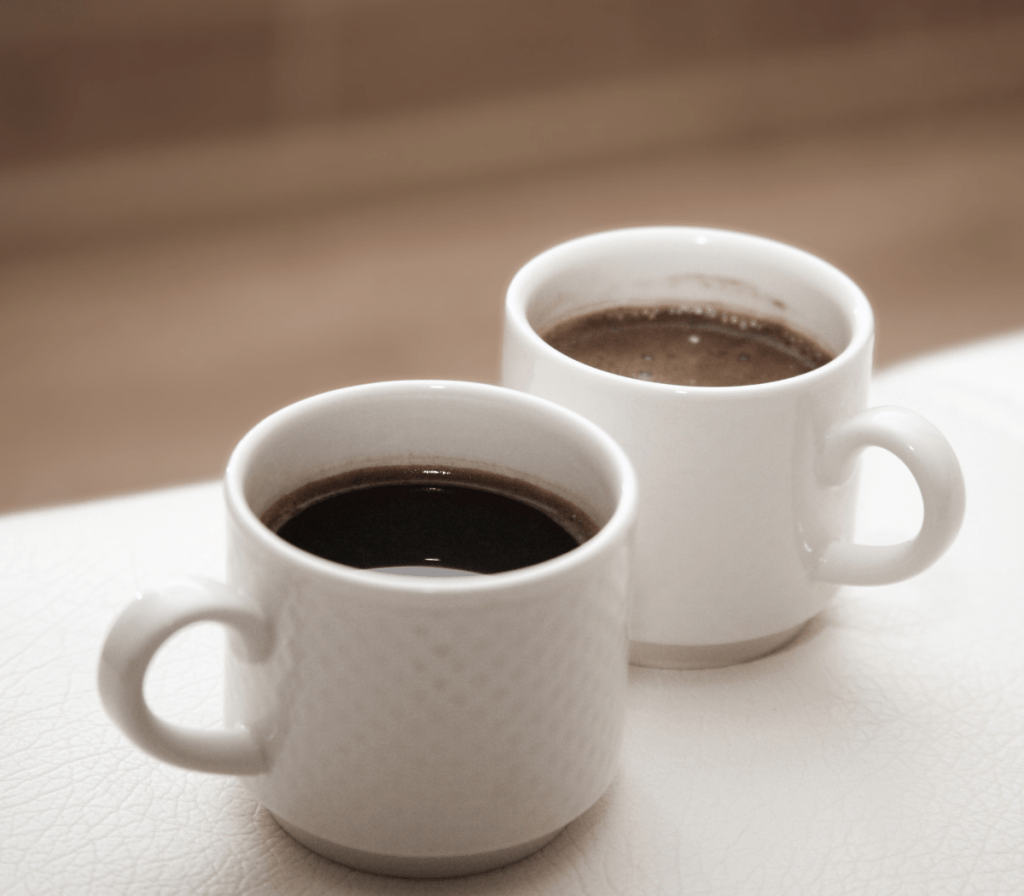
Is Decaf Dangerous? CNN’s Hit Piece

Most coffee snobs reject decaf coffee on principle. After all, part of what makes coffee great is the added bonus of that little pick-me-up when the caffeine binds to adenosine receptors in the brain blocking those not-welcome feelings of being tired (for a fun video on how caffeine affects your brain, click here).

But decaf does provide a good service. It helps us to enjoy coffee in after supper without worrying about staying up all night. It helps those with certain heart conditions to enjoy coffee without caffeine affecting their heart.

Whether or not you enjoy decaf coffee, CNN wants to convince you that drinking decaf is dangerous to your health. And they are partially right. It all depends on the process that the producers use for decaffeination.

To get a coffee bean to decaf levels, most producers use a chemical called methylene chloride. If you have never heard of that chemical before, it might be helpful to know that up until 2019, it was used as a paint stripper.

In the article, Kristen Rogers writes of its other uses:

That chemical is methylene chloride, a colorless liquid that’s used in certain industrial processes, “including paint stripping, pharmaceutical manufacturing, paint remover manufacturing, and metal cleaning and degreasing,” according to the Occupational Safety and Health Administration.

It was banned in 2019 for this use by the EPA, but it is still used in one of the decaf processes for coffee. Rogers goes on:

Methylene chloride has long been known to be a carcinogen, designated as such by the National Institutes of Health’s National Toxicology Program, the Environmental Protection Agency, and the World Health Organization…In addition to being carcinogenic, methylene chloride can cause other health harms, such as liver toxicity and at higher exposures neurological effects, and in some cases death,” . . . These risks are in the context of external acute exposure to high levels of the chemical, or ingestion of the chemical on its own, according to the US Centers for Disease Control and Prevention.

Methylene chloride has long been known to be a carcinogen, designated as such by the National Institutes of Health’s National Toxicology Program, the Environmental Protection Agency, and the World Health Organization…In addition to being carcinogenic, methylene chloride can cause other health harms, such as liver toxicity and at higher exposures neurological effects, and in some cases death,” . . . These risks are in the context of external acute exposure to high levels of the chemical, or ingestion of the chemical on its own, according to the US Centers for Disease Control and Prevention.

As scary as that sounds, it needs to be put into perspective. The FDA allows decaffeinated coffee to contain trace amounts of methylene chloride, below 10 parts per million (0.001 percent). However, some brands have been found to contain higher levels, including 1.4 parts per million, 3.5 parts per million, and 8.9 parts per million. That’s a tiny amount. However, it is possible that even that amount, over time, could be harmful.

Compare that to a decaffeination process called, The Mountain (or Swiss) Water Process (MWP). Put simply, MWP works like this: Green (unroasted) coffee beans are soaked in pure water from mountain glaciers, allowing the caffeine and coffee solids to dissolve. Water is then passed through activated charcoal filters to remove caffeine while retaining the flavor compounds. It is a completely, natural, guilt-free process of decaffeination (for more information, click here).

Until I started New Morning Mercies Coffee, I had no clue about these differences. I just thought decaf was decaf. But now, as a coffee roaster, I will NEVER carry decaf that is processed with methylene chloride. Every decaf bean you purchase at New Morning Mercies will be processed via MWP. You can drink freely and without anxiety.

If you are looking for an AMAZING cup of decaf, check out our newest arrival, Decaf Delight. Seriously, it’s the best decaf I have ever had. Decaf is usually thin and sometimes metallic, but not this. It is a full-bodied Sumatran bean with tons of delicious flavor. Best of all, it was processed via Mountain Water Process, so you buy, drink, and enjoy, knowing your coffee won’t give you cancer or neurological disorders.
Why We Offer Only Single-Sourced Coffee

New Morning Mercies Coffee is primarily dedicated to roasting quality, ethically sourced, single-origin coffee. With single-origin coffee, the coffee consumer can truly enjoy the wonders of coffee the way it was supposed to be: on the merits of a single kind of bean from a specific region in the world.

What is single-origin coffee?

Single-origin coffee is just what it sounds like: beans that are from a single origin. When you buy single-origin coffee, you purchase beans from one particular farm in one region. They are not mixed with any other kind of bean.

Single-origin vs. blends

Most of the bags of coffee that you buy from the grocery store or chain coffee shop are blends. A coffee blend is when two (or more) single-origin beans are mixed together. Sometimes blends are simply the addition of a flavor (either an oil or a syrup to whole beans, or a ground flavor such as cinnamon or cocoa to the coffee grounds). For example, you might have a blend that is 1/3 Sumatra (a type of bean from Indonesia) and 2/3 Columbian.

The advantages of a blend are that the producers of the blend combine the unique flavors of each kind of bean to unlock an interesting flavor. For example, in one blend, you might get the sweetness of a Costa Rican Geisha with the tart of an Ethiopian Sidama. Further, blends make a coffee brand stand out. You will NEVER get an exact blend from one producer to another. What one chain labels as a “blend” will not be recreated by another.

The disadvantages of a blend are that many producers, especially big chain producers, use lower-quality beans in their blends. Why they do this makes sense – it cuts down costs for maximum profits and better price points for the consumer. The result of this is that people rarely get to experience a REALLY great cup of coffee. They may mask the quality of their coffee with natural and artificial flavoring, but those will never substitute for a naturally excellent cup of coffee.

Further, because big chains are masters at cutting costs, they will never disclose what kind of beans are in their blends, nor their percentages. This leaves you at the mercy of their “expertise.” They pay big money to make their packaging look attractive and exotic, when in reality you may just be getting cheap coffee at a competitive price point.

Another disadvantage, and we admit this is an opinion, is that we believe that really good coffee can, and should, be savored by a single origin at an affordable price.

So at New Morning Mercies, we believe that single-origin is where it’s at. We will occasionally offer some flavored “blends” for special occasions, such as holidays, but we will only add flavors to our already-great, single-origin beans.

Jamaican Blue Mountain and Kona Coffee

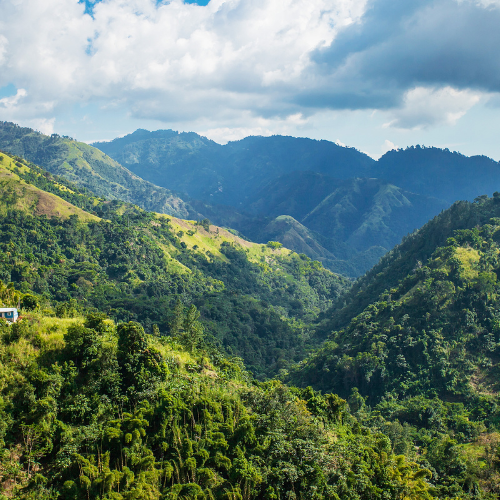
I’ve had a number of people ask me if I would stock authentic Jamaican Blue Mountain coffee. I love authentic Jamaican Blue Mountain. It is one of the most flavorful and smooth coffees on the market. But sadly, I don’t stock it and I don’t plan to. Here’s why.

The coffee industry is very economically complex. Unlike most other industries, coffee prices are not dependent on quality. In fact, there are crazy delicious beans that are quite inexpensive and really bad beans that are crazy expensive. It usually comes down to two things: international trade/labor costs and the negotiation of the farmers/suppliers and the distributors.

When it comes to Jamaican coffees there are two things at play. First, the labor costs are much higher than most other countries. This does not mean that other countries and regions are paying their labor force unfairly.,1 but it just means that in Jamaica, the labor costs are much higher. Second, without going into the different ways that coffee is harvested throughout the world, the way that the farm workers harvest in Jamaica is more labor-intensive. So those two things combined make for a much more expensive coffee.

So how much more is it? Well, the cheapest cost I can find (that’s my cost before roasting and packaging), is $35.99/lb. I don’t know anyone in my area who would pay even close to that for a pound of coffee. And that’s just the cost. I’d have to hike the price up to make somewhat of a profit, and even then the profit wouldn’t be worth the cost to purchase and produce. So, as much as I’d like to have some amazing Jamaican beans in my portfolio, it just isn’t worth it.

And in case you are wondering, Kona coffee is expensive for the same reason. Kona, however, is a bean from Hawaii, so the coffee producers have US minimum wage, benefits, and state regulations on top of the normal costs such as packaging and shipping.

So what about Jamaican Blue Mountain and Kona blends at Costco or Kwik Trip that are quite affordable? It’s not a matter of economics. It’s a matter of marketing. Look at the labels. There are no Kona or Blue Mountain beans in those bags. They are just blends: beans from all over the world that passed the test of resembling the Blue Mountain and Kona profiles. But they are just that they aren’t the real thing and won’t come close to the rich profiles of either.

I’ll admit, Jamaican Blue Mountain and Kona beans are good but not $40+ good per pound. You can get an amazing flavor at a much lower price point. Check out our online store for available options.

  1. In fact, if you purchase free trade or other certified coffee, there are regulations in place to ensure that workers and farmers are getting paid fairly according to their local economy. ↩︎

WHICH ROAST HAS MORE CAFFEINE? 

It’s an unfounded assumption that dark roasts have a higher caffeine level than light roasts. But the opposite is true, with a caveat. In general, the rule is the lighter the roast, the higher the caffeine content. Surprised? You’re not alone. But here is the basic science behind it.

When a bean goes through the roasting process, it loses weight. So much so that an average roast will lose 15-18% of its original weight. That means, that if you roasted 454 grams of green coffee beans (1lb), the weight afterwards will only be 386 to 372.25g. That’s a significant amount of weight. Within that loss, there is a combination of moisture that gets evaporated as well as what we typically call chaff, and, yes, caffeine. 

So when we talk about caffeine content in a roast, it’s important to know that the longer that beans are roasted, the more weight they are going to lose. So although a dark roast may be more robust and bold, it will typically carry less caffeine than that of a light roast. 

Now is there a big difference in caffeine levels between dark and light roasts? Not as much as you would think. While it’s true that coffee will lose 15-18% of its weight during the roasting process, keep in mind that we are referring to green beans compared to roasted beans. There is a lot of chemistry that happens between green to brown beans (whether light or dark). So when we talk about a 15-18% loss in weight, the 4% loss between 15 to 18 isn’t a significant amount. Think about it like this: you have 100g of beans you are going to roast. After the roasting process, you are left with 82-85g of coffee ready to consume. That weight isn’t significant enough to make a huge difference when deciding how to start your morning (or keep your day going).

Now, I did say before that there is a caveat. Where you could find a significant difference in levels of caffeine is in the kind of bean that you going to roast or drink. The most common kind of bean that you will find on the shelf is called an Arabica. Arabica is simply a bean from a large, diverse, yet specific family of coffee plants. It typically has more of a pleasant taste, but usually costs more. The other major variety is called Robusta. It is very rare to find a bag of robusta beans sitting on the shelf at your grocery store. Most coffee snobs (and normal people for that matter) don’t just dislike robusta coffee but despise it. It is cheaper but less enjoyable. Robusta is typically used in instant coffee. 

Another major difference between Arabica and Robusta is the caffeine content. While more enjoyable, Arabica coffee contains around 1.2 to 1.5% caffeine. On the other hand, Robusta, though less enjoyable and cheaper, averages around 2.2 to 2.7% caffeine content. So, if you want more of a jolt, Robusta is your best bet, though you will sacrifice flavor and quality.

Another caveat is how the coffee is prepared for consumption. Generally speaking, cold coffee is more concentrated and therefore has more caffeine. The caffeine amount will also depend on the ratio of water to coffee grounds. A lower ratio of water to coffee will result in more caffeine. The higher, the less. 

So, do dark roasts have more caffeine? It depends. The science behind coffee is fascinating and will always amaze me. My hope is that you appreciate it more the next time you take a sip – regardless of the caffeine amount.

What are those light brown flakes in my coffee?

Occasionally, you might find some very light brown flakes in your beans (or grounds). They are called chaff and they are a wonderful part of the coffee process. They are the outer layer of a raw coffee bean that dries up and comes off of the bean when the bean is in the high-heat stage of the roasting process. The chaff resembles that of the thin, outer layer of a peanut when it is removed from the shell.

Most of the chaff comes off in the roasting and cooling processes and is discarded by the one who is roasting. There is a serious amount of chaff that comes off in a roast and this chaff is responsible for most of the fires that come to roasters who aren’t attentive to their roasts. It’s also a wonderful addition to any compost as it adds quite a bit of nitrogen to the soil.

Though most of the chaff comes off and is discarded, occasionally some of the flakes either stick to the bean it came from or don’t make it through the sieve. You can pick those out as you prepare your coffee for the brewing process if you want, but they are harmless and can be ground up along with the beans.

At New Morning Mercies Coffee, we inspect every bean by the spoonful as it comes off of our bean cooler to make sure we eliminate as much chaff as possible, but there are always those flakes that not only avoid the sieve but also the sharp eye of our quality inspections. No need to worry, they are just another wonderful part of the coffee experience.